
Practice is better than theory
Choosing a managed service provider (MSP) is a high‑impact decision. It touches your users, your roadmap, and your risk posture. Yet, most buying processes still rely on slideware, references, and long lists of requirements. At 2nd wind—headquartered in Munich and London—we believe there is a better way to evaluate fit: run the service together, on real workloads, for a fixed period, with clear success criteria. We call this the LinkedMotor Pilot.
In three focused months, you can observe how we work, test integration with your tools, assess governance, and measure service outcomes. No abstractions. No irreversible commitments. Just pragmatic evidence you can use to make a confident decision—continue, iterate, or walk away with useful artefacts. This format can help budget‑conscious IT leaders reduce uncertainty, align stakeholders, and surface the real effort required to operate modern infrastructure and workplace platforms at scale.
Why a pilot for Managed Services?
A pilot is not a proof of concept in a lab. It is controlled production operation across an agreed scope, timebox, and governance model. For CIOs and Heads of Support, this can help in three ways:
De‑risk the decision. You see the mechanics of handoffs, incident flow, change approvals, and communications within your context, with your data, and your team.
Align on scope. An authentic view of the service boundary—what stays with your engineers, what moves to the MSP, and what co‑managed looks like—reduces friction later.
Build a baseline. You start measuring the right things (for example: request aging, change success rate, or patch cadence) so improvement discussions are grounded in real trends, not assumptions.
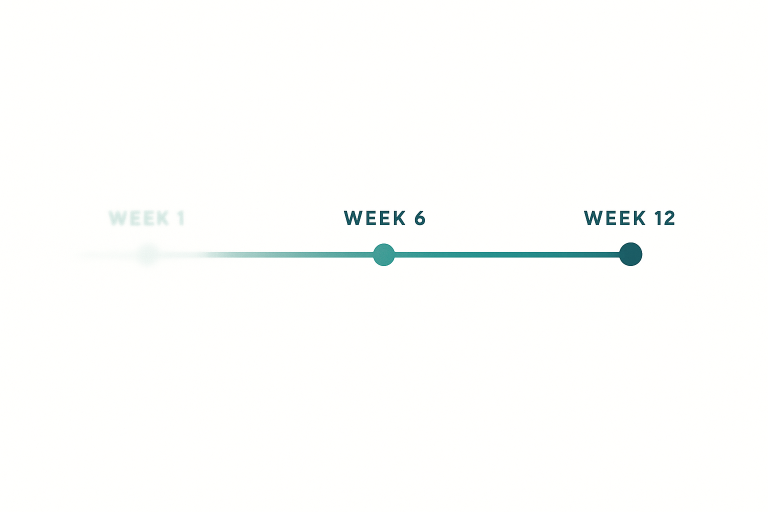
What the LinkedMotor Pilot delivers in 12 weeks
The pilot is designed to produce tangible outcomes, not just meetings. By day 90, you can have -depending on the chosen Service Level:
A service blueprint. A concise map of processes, queues, and touchpoints across incidents, requests, changes, problems, and major events.
Runbooks as code. Version‑controlled operating instructions in Markdown, aligned to your stack, that your team can keep, extend, or use with any provider.
Observability baselines. Practical dashboards and alerting thresholds for the agreed scope, with noise reduction and escalation logic tuned to your priorities.
Access and identity controls. Documented least‑privilege access model for the pilot scope, including joiners‑movers‑leavers handling and break‑glass flow.
Governance rhythm. A working cadence—standups, service reviews, and executive checkpoints—that clarifies who decides what, and when.
Decision‑ready proposal. A clear recommendation for go‑forward options (managed, co‑managed, or insourced), including scope, service windows, and commercial model.
How the pilot runs
The LinkedMotor Pilot follows a simple, transparent rhythm. We keep the timebox crisp, and the documentation living.
Weeks 1–2: Kick‑off, access, discovery
We align on scope, stakeholders, tools, and decision criteria. We set up a shared channel in Teams or Slack, agree on ticket flows, and provision read‑only access where possible. Discovery focuses on your top “golden paths,” critical dependencies, and change windows. This phase establishes the baseline for metrics and communication.
Weeks 3–4: Observability and noise reduction
We integrate with your monitoring and ITSM, tune alerts, and tag assets for ownership. The goal is to reduce alert fatigue, clarify who responds first, and ensure that escalation, if needed, is fast and documented. You’ll see initial dashboards and a short list of “quick‑win” hygiene actions.
Weeks 5–8: Service exercises
We run real work under real conditions. Examples include incident response for a representative service, a controlled change in a non‑critical area, patching for a defined estate, or a capacity‑cost review in cloud. Each exercise ends with a brief after‑action review and runbook updates. This can help your team understand the level of automation appropriate for each domain.
Weeks 9–10: Hardening and handoffs
We tighten runbooks, improve auto‑remediation where sensible, and finalize handoffs between internal and 2nd wind teams. We also walk through continuity scenarios—who acts during an out‑of‑hours alert, how vendor escalations work, and how we coordinate during a planned change freeze.
Weeks 11–12: Service review and go‑forward options
We consolidate evidence, compare outcomes to the initial baseline, and present options. You choose to proceed to managed service, extend the pilot scope, or close the pilot and retain all artefacts. Whatever you decide, you leave with clarity and usable documentation.
Scope choices and commercials
Every organization starts from a different place. To keep the pilot useful and predictable, we recommend a single, well‑defined scope such as a specific business service, a geography, or a technology domain.
Typical pilot scopes. End‑user support for a business unit; Microsoft 365 and identity hygiene; a core line‑of‑business application and its database; a cloud workload and its cost guardrails; or network edge operations at selected sites.
Commercial approach. The pilot is delivered for a fixed fee with an agreed set of deliverables. If you continue into a managed or co‑managed model, pilot artefacts roll forward. If you stop, you keep everything created during the pilot.
What you keep—even if you don’t continue
We design the pilot so the output is valuable on its own -depending on the booked Service-Level:
Service Blueprint and RACI. Clear roles and responsibilities help reduce “ticket ping‑pong,” whether you continue with us or not.
Runbooks and scripts. Stored in your repository, licensed for your use, ready to evolve.
Dashboards and thresholds. Deployed in your monitoring stack or your tenant of our platform, with ownership tags and alert routes.
Risk and improvement log. A prioritized list of hygiene and resilience actions, with owners, dependencies, and suggested sequencing.
Security, data, and compliance in the pilot
Security begins with boundaries. We establish least‑privilege, time‑boxed access, use step‑up authentication for administrative actions, and keep an audit trail of changes. Where possible, access is issued through your identity provider, and we prefer operating in your tenant or subscription so data gravity stays with you.
We do not remove your controls. During the pilot, your change approvals, your security tooling, and your data residency choices remain authoritative. If you need a data processing addendum for the pilot scope, we handle that early. Our operational practices align to common frameworks such as ITIL, and our review cadence can support your internal audit needs.
Tooling and integrations
MSPs should fit into your tooling landscape, not the other way around. We integrate with common platforms in ITSM, monitoring, endpoint management, identity, collaboration, and cloud. We maintain certified partnerships with Cisco, Microsoft, and Google. If you prefer to keep tickets in your system of record, we can work as a connected queue. If you need a light overlay for the pilot, we can provide a minimal service portal and reporting that live in your tenant.
Stakeholder engagement and governance
Clear communication is the backbone of a useful pilot. We propose a simple operating rhythm -matching the size of your organisation:
Daily standup (15 minutes). Progress, risks, and today’s priorities with the working team.
Weekly service sync (30 minutes). Ticket trends, changes, and upcoming exercises with the service owner.
Monthly service review (60–90 minutes). Outcomes versus baseline, risk review, and adjustments with the sponsor and key stakeholders.
Executive checkpoint (at start and end). Alignment on success criteria on day 1, then decision on day 90 with evidence.
This cadence can help eliminate surprises, reduce context switching, and give leaders a durable view of service health.
Success criteria and the right metrics
Metrics without context can mislead. In the pilot, we co‑define a small set of indicators that matter to your goals, then track trends, not absolutes. Common choices include:
Responsiveness. Time to acknowledge, time to first meaningful update, and time to resolve for the scoped services.
Change effectiveness. Change lead time, change success rate, and variance to planned windows.
Hygiene posture. Patch coverage for the pilot estate, endpoint compliance drift, or backup verification rate, depending on scope.
User experience. Request aging, top contact drivers, and sentiment from support interactions in the pilot group.
We avoid vanity metrics, and we document the measurement method so future comparisons remain fair.
Risks, constraints, and what this is not
A good pilot sets expectations early:
Not a big‑bang cutover. We operate a defined slice of the estate, so we can prove depth before breadth.
Not indefinite support. The pilot has an end date. If a production incident occurs outside the scope, your existing teams or vendors remain primary.
Not a silver bullet. Some issues require structural fixes beyond a 12‑week window. We document these and, where helpful, prototype the first step.
Not a promise of specific outcomes. The pilot produces evidence and options. It can support better decisions; it does not guarantee a specific result.
Getting ready: a short checklist
Preparation keeps the 12 weeks focused:
Executive sponsor and service owner. Decisions need named roles.
Defined pilot scope. A single service or domain with clear boundaries.
Access plan. Read‑only first, with documented elevation when needed.
Tooling connections. ITSM, monitoring, and identity details agreed in week 1.
Change calendar and windows. Known freezes, maintenance slots, and blackouts.
Success criteria. The few metrics and deliverables that will guide the day‑90 decision.
What happens on day 90
By the end of the pilot, you will have a working view of how managed or co‑managed operations can function in your environment. The decision pack includes the service blueprint, runbooks, dashboards, risk log, and an option paper with scope, service windows, and commercials. You choose one of three paths:
Proceed. Convert the pilot into an ongoing service with agreed scope and governance. Artefacts and tooling roll forward.
Extend. Add scope or time to validate additional services, seasons, or regions.
Conclude. Close the pilot, retain the artefacts, and continue with your internal team or another provider.
Each path can support your budget and governance needs without locking you in.
About 2nd wind, and next steps
2nd wind is an IT MSP based in Munich and London. We built the LinkedMotor Pilot for IT leaders who prefer evidence over claims, collaboration over handoffs, and clarity over surprises. We maintain certified partnerships with Cisco, Microsoft, and Google, and we integrate with the tools you already trust.
If you are considering a managed or co‑managed model, the next pragmatic step is simple: pick a contained scope, run the LinkedMotor Pilot for three months, and make a decision with data. This can help you de‑risk the journey, align stakeholders, and focus investment where it matters.
Three months. Real work. Decision‑grade clarity. That’s the promise of a pilot done right—test the MSP before you buy, and keep the value either way.